Concrete Coating Application Guide
Strict technical methodology to ensure maximum bonding adhesion and multi-decade service life
Concrete Substrate Acceptance Criteria
UKK Quality Assurance Standard Checklist
Step 1: Substrate Inspection & Moisture Testing
Concrete must cure at least 28 days. Test with a calibrated Tramex moisture meter or ASTM plastic sheet test. Substrate moisture content must strictly remain below 4% before applying solvent-free epoxy.
Step 2: Surface Profiling & Mechanical Grinding
Diamond grind or captive shot-blast the slab to eliminate weak laitance and establish a Concrete Surface Profile (CSP 2-3). Vacuum completely with HEPA industrial vacuums. Fill cracks with UKK Epoxy Mortar.
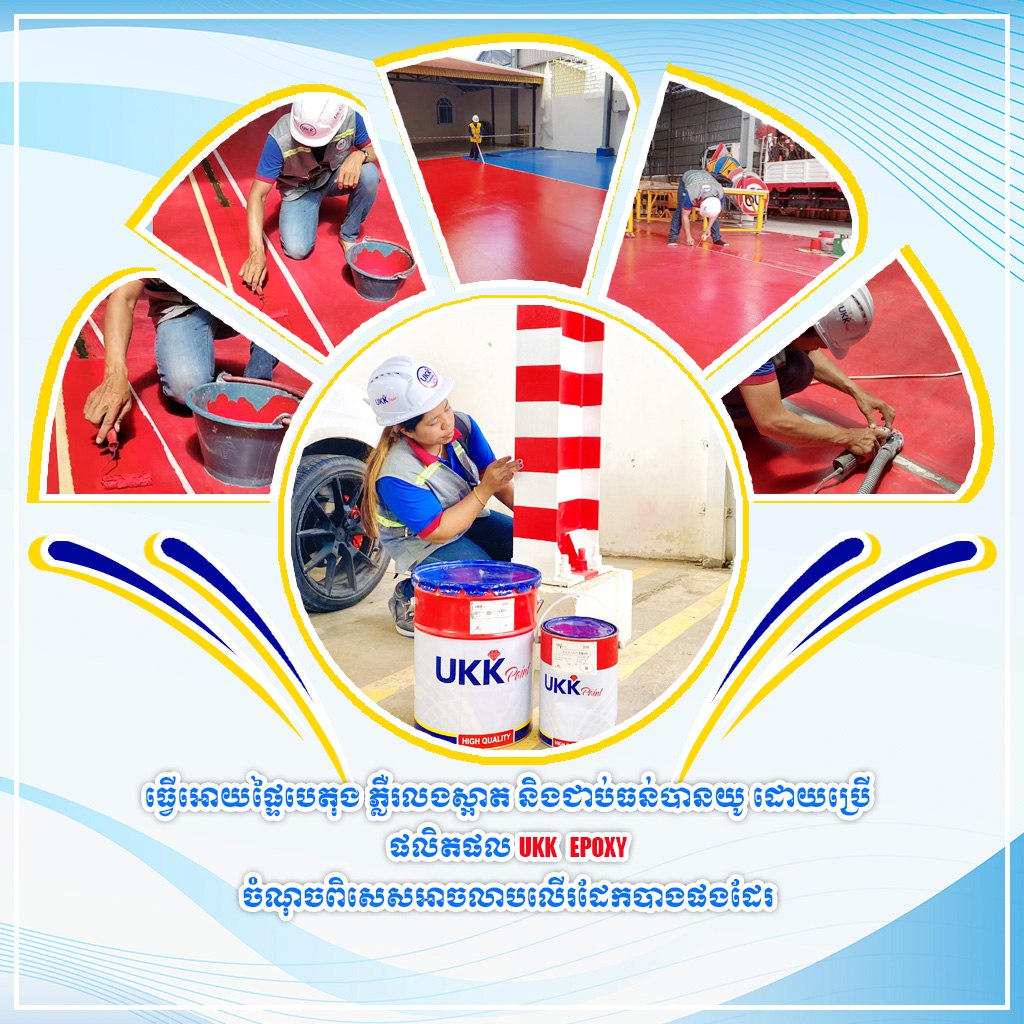
Step 3: Deep-Penetrating Primer Application
Apply UKK Primer or Bitumen Primer to penetrate deep into capillaries, seal outgassing pores, and create a chemical weld between the concrete and top resin. Allow 6-8 hours curing.
Step 4: Body Coat & Self-Leveling Epoxy (UKK SL30)
Measure Part A and Part B with a digital scale. Mix at 400-500 RPM for 3 minutes. Pour immediately, spread evenly with a calibrated notched squeegee, and roll with a spike roller within 20 minutes to eliminate air bubbles.
Step 5: Protective Topcoat & Demarcation Line Painting
Apply abrasion-resistant UV-stable PU or high-gloss TC-20 topcoat. Paint safety pedestrian walkways and forklift navigation lines using vibrant RAL 1023 Traffic Yellow or RAL 9016 Traffic White.
Post-Application Care & Industrial Maintenance
Allow 24 hours before pedestrian walking and 72 hours before running forklifts or heavy equipment. Avoid water washing for the first 7 days.
Clean with neutral pH industrial detergent (pH 7-9) using automatic floor scrubbers with soft nylon pads. Do not use metal wire brushes.
Immediately wipe up oil, battery acid, or chemical spills within 2-4 hours to prevent localized discoloration or chemical etching.